Project
Market Growth Intelligence
A Python decision-support MVP connecting B2B acquisition spend to downstream sales outcomes through validated data, diagnostics, and evidence-gated recommendations.
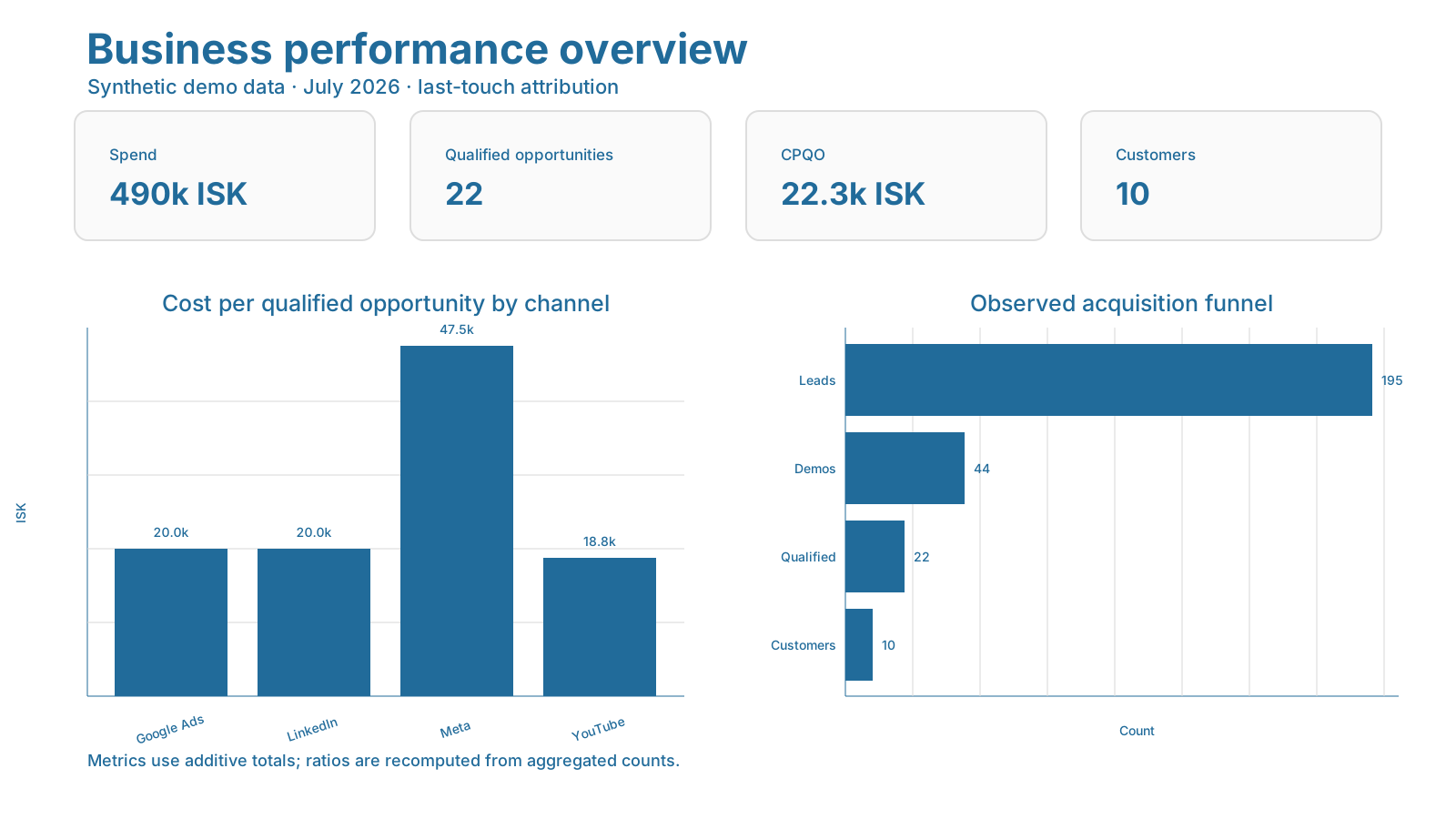
Overview
Market Growth Intelligence is a reusable B2B decision-support system that connects acquisition inputs to downstream sales and commercial outcomes. Version 0.1.3 is the completed initial MVP release candidate.
The reusable flow is source adapter → validated observations → metrics → aggregation and comparison → diagnostics → evidence-gated recommendations → audience presentation. The first consulting example uses synthetic Elvo data kept outside the reusable core; it is not presented as real client performance.
Problem
B2B growth decisions become unreliable when source schemas, funnel definitions, periods, currencies, attribution rules, and business thresholds are implicit or inconsistent. A useful system must expose those assumptions, detect data problems before recommendation logic runs, and withhold action when the available evidence is insufficient.
Approach
The system separates vendor-specific ingestion from a typed reusable core. Adapters normalize source data with provenance; domain models enforce invariants; analytics aggregate additive observations before recomputing ratios; diagnostics distinguish invalid, suspicious, and unusual observations; and decisioning gates recommendations on explicit evidence thresholds.
Currency, attribution, reporting period, and source provenance remain explicit so incompatible observations are not silently combined. A thin Streamlit layer presents the same underlying evidence to executive, marketing, analyst, and revenue audiences.
Outcome
The v0.1.3 MVP implements the acquisition-to-commercial-value workflow from normalized campaign observations through quality diagnostics, funnel and sales metrics, commercial outcomes, budget guidance, scalability evidence, experiment tracking, and audience-specific presentation.
The release boundary is explicit: the included scenarios are deterministic synthetic data, recommendations are bounded by evidence sufficiency, and the system does not claim causal lift, automatic FX conversion, live ad/CRM connectors, or multi-tenant SaaS infrastructure.
Tradeoffs
Decision support is only as credible as its measurement contract and failure behaviour. Preserving undefined metrics, rejecting incompatible provenance, separating synthetic examples from reusable logic, and withholding recommendations when evidence is weak are product requirements rather than defensive implementation details.
Professional profile
Continue from the evidence
See how this work fits into my broader computational science and software engineering background, or get in touch about relevant work.